

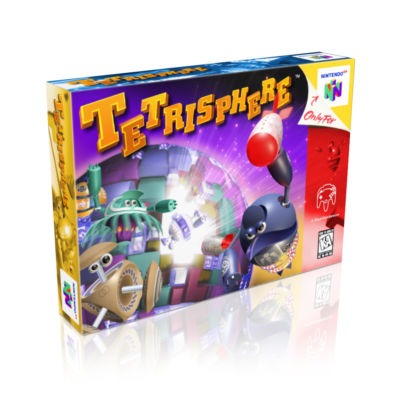
Tetrisphere was a puzzle game released for the Nintendo 64 in 1997 by Nintendo of America. It was developed by H2O Entertainment. It was the first published title I worked on and I learned much about the industry and the craft of game making during its development. I also acquired some life long friendships.
Like most video game concepts when they start out, Tetrisphere was originally much larger in scope, and conceived of quite differently than what actually shipped. These are some of the experiences H2O had in developing the game, and the part I played.
Below is the first version of Phear, as it was called, that I saw in August 1995 playing on the Atari Jaguar. It was created by Chris Bailey who subsequently helped found H2O Entertainment.
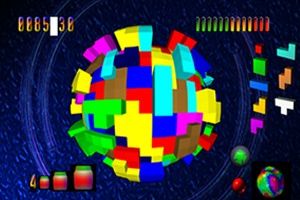
Phear was envisioned to be an adventure in cyberspace, pitting the player and his avatar against a future computer virus which would take over the minds of all connected to the internet if you didn’t defeat it. The goal was to unlock the game through “encrypted” puzzles – hence the Tetris sphere. It was originally to have cinematics and story development, in a kind of Mind’s Eye/Lawnmower Man universe.
The player avatars of the early game were Mind’s Eye type beings, random references to pop culture and current social archetypes. A modern reference might be Ready Player One.
Once Nintendo became involved, Phear was lined up with the Tetris licence and the game’s visual design changed radically. A much more family oriented theme was needed.
My role for much of the project was the design of the GUI and menu system, but I also had input into other areas of graphic design. Devising a visual connection between the elimination of blocks, and the storage of their energy only to be released as bonus power ups was a major design concern of the GUI. The main play screen changed constantly as we felt out what was and what wasn’t important for the player to see. In the earliest versions a player had access to all powerups at the same time depending on your energy level. Later it was made into more of a bonus system rewarding the players performance. Below are various mock ups by myself and Roland Longpre.
Of all the elements of video games, it always seems menus get the least amount of time. Until recently they were always allocated about a week for graphic design, and many still look like there were borrowed from a 16 bit system. Menus are very important at setting the mood and telling a story for the player, and best used when they create a seamless blend of the needs of the game, and the needs a the games reality. Goldeneye’s watch interface is one great example.
Work on Tetrisphere’s menu system explored the fun tech feel we wanted and early on was certainly influenced by the wipeout aesthetic done by pwei.
Some of the the more important elements that I feel make a successful looking menu is movement. Of course it should be easy to navigate and direct the users eye, but they shouldn’t be boring to look at. And when they transition between screens it should be fast and interesting. Menus might not need to have this level of polish to be playable, but they will affect your player’s game experience.
The evolution of the game’s splash screen shows how our thinking of style changed over the space of a few months. As originally conceived Phear was a darker, edgy, cyberspace experience with much more character development, but as a mainstream puzzle title, especially with the Tetris brand name starting to be associated with it, the game needed to be a little more lighter and accessible visually.
Below are my iterations on the Splash screen. The first screen is an early stand-in from before my time on the project. Subsequent screens explore colour schemes and a “family-tech” feel. I’m not quite sure what happened with that road diner version. The unused “Tetrisphear” logo is based on a font done up by Roland Longpre. In the end I turned to a blocky font to align more closely with the Tetris brand, and for clarity.

Tetrisphere’s primary menu form was an undulating block layer which created a soft 3d element behind the text. When the screens transitioned, the blocks took apart the screen and flew the the viewer only to reform the following screen. Their colour changed according to the part of the menu tree you were currently in. Jon Skinner and I developed the look.
The final player avatars became fun little spherical little bots; Stomp, Turbine, Rocket, Gear, Jak and Wheels. Roland Longpre did the main design work and I, and others helped with their other applications (boxart, in-game, etc.).
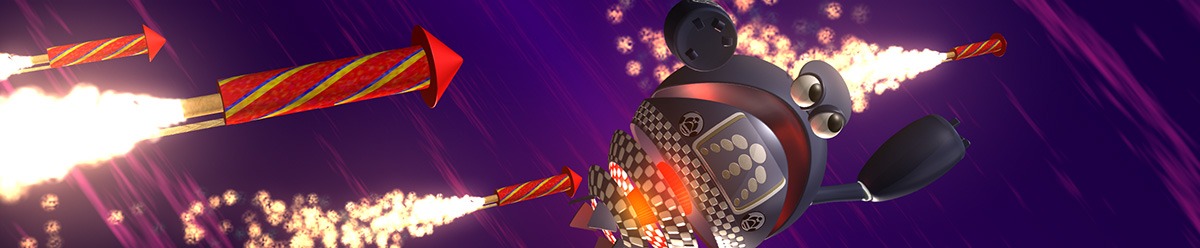
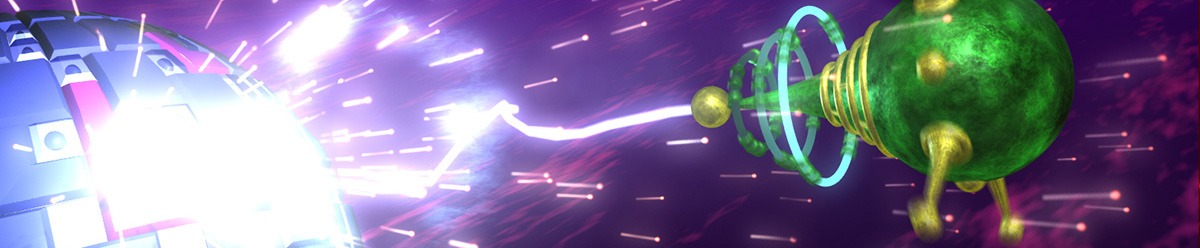
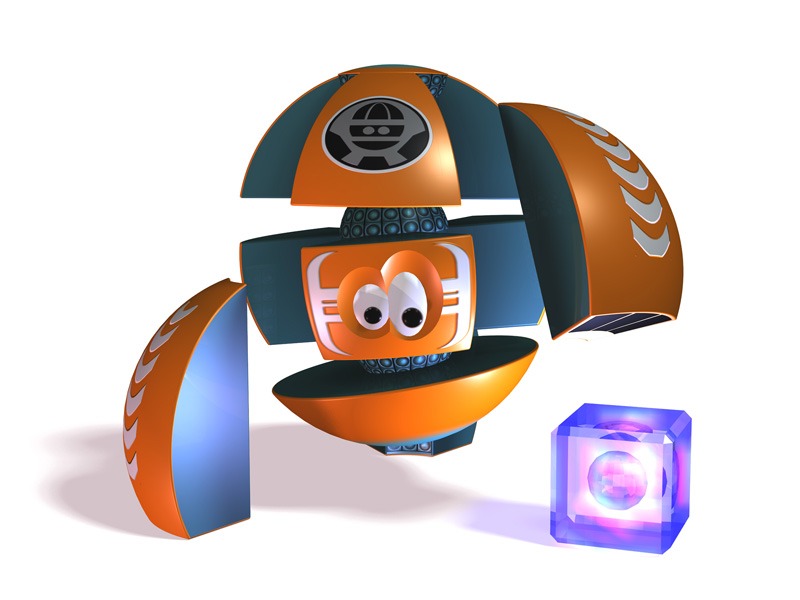

The game included a surprising number of animated sequences and cut scenes involving these characters. I helped storyboard these sequences. I also did my first animations where needed for several menu items, cameras, and other items.
All the in-game 3d work was modeled and animated in Lightwave, and we wrote our own custom exporters and animation playback system to work with the N64.
We did all the hi-end work in Power Animator. Thanks to the relationship of Silicon Graphics, Alias, and Nintendo at the time, first party developers were floating in Indys and Indigos.
At the E3 expo in 1997 we got to see the public reaction to the game for the first time. As my first game released in the industry it was very exciting.


Tetrisphere was received very well, and was one of the first puzzlers released on the N64. It is included in a book of classic video game “must haves” put out by Gamespot. Check out some of the reviews at Gamerankings and IGN.
©1997 Nintendo of America. All rights reserved.